

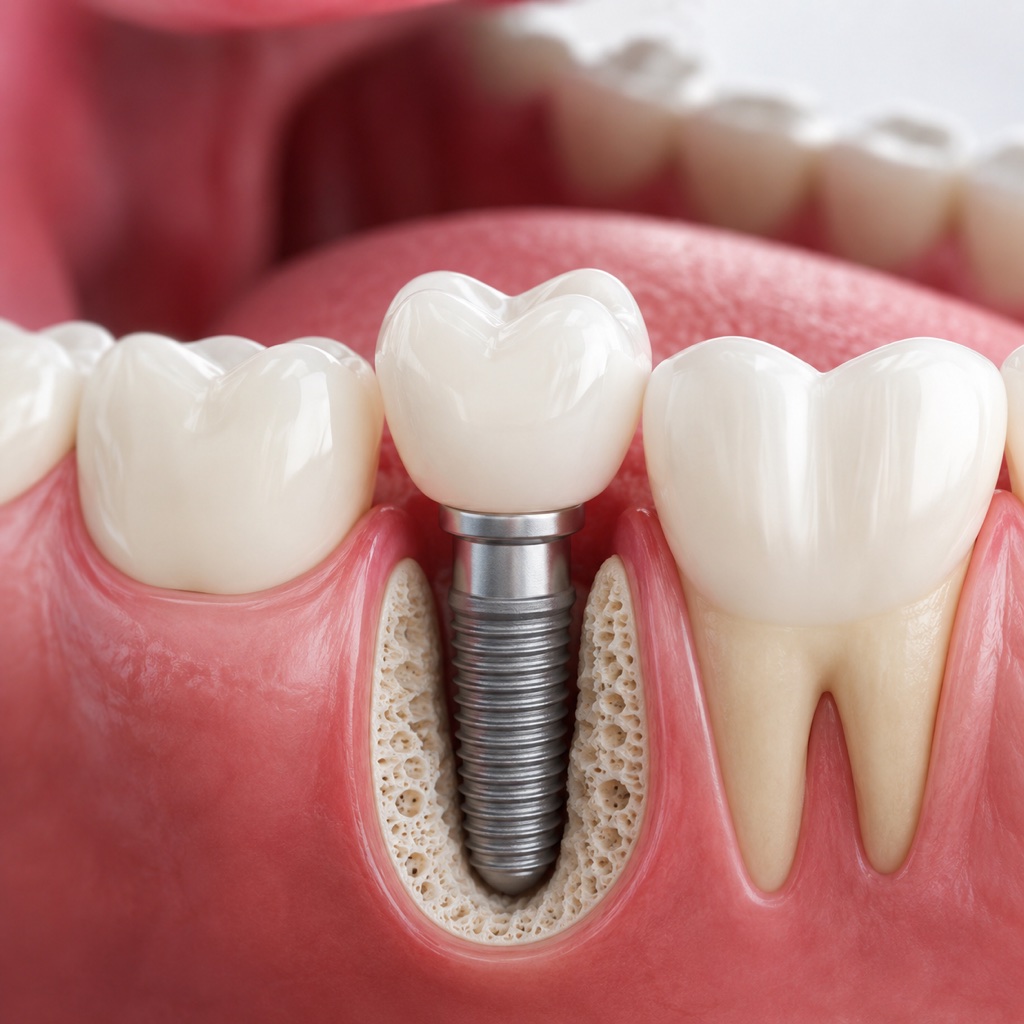
About Dental Implants
Dental implant planning considers oral health, bone availability, bite forces, appearance, medical history and long-term maintenance. Bone augmentation is discussed only when assessment indicates it may be required.
When this treatment may be needed
- Single or multiple missing teeth
- Implant-site assessment needs
- Bone-volume concerns
- Complex prosthetic requirements
Common symptoms or concerns
- Missing teeth
- Difficulty with removable prostheses
- Need for implant feasibility assessment
- Questions about bone support
How evaluation and planning work
- Review of dental and medical history
- Clinical examination and diagnostics where indicated
- Discussion of suitable options, limitations and treatment sequence
- Clear guidance about preparation, aftercare and follow-up
Recovery and aftercare
Implant aftercare focuses on oral hygiene, prescribed medicines, review visits and avoiding pressure on healing sites when advised.
Frequently Asked Questions
Am I a good candidate for dental implants?
Suitability depends on oral and gum health, available bone, medical history, bite, hygiene and treatment goals. A clinical and radiographic assessment is required before an implant can be recommended.
How long do dental implants last?
Implants can function for many years, but longevity varies with health, implant position, restoration design, oral hygiene, smoking, bite forces and maintenance. No lifespan can be guaranteed.
Is the dental implant procedure painful?
The procedure is normally performed with appropriate anaesthesia. Temporary soreness or swelling can occur afterward, and the expected recovery depends on the site and whether additional procedures are needed.
How long does the complete dental implant treatment take?
Timing varies with healing, bone and gum condition, the number of implants, and whether grafting or staged restoration is required. A personalised sequence is provided after assessment.
What factors can affect the success of a dental implant?
Gum health, bone support, medical conditions, smoking, oral hygiene, bite forces, implant position, healing and regular maintenance can all influence outcomes.
Need help deciding?
Request a consultation and the clinic team will guide you based on your concern and clinical assessment.
Book Appointment